
Between Legends and Foam: The Myths of Kythira through the Eyes of the Ancients
When you arrive in Kythira, you don’t just step on another island. You step on a living fairy tale. I understood this well on my first evening in Avlemonas, listening to a local fisherman, his face hollowed by the salt, point out the sea to me. “Here, my child,” he told me, “you don’t just swim. This is where the beauty of the world was born.”
Later, searching the travel guide kithera.gr, I realized that these stories of the elders are not mere legends for tourists. They are the very soul of Tsirigos.
Aphrodite and the Secret of Paleopolis
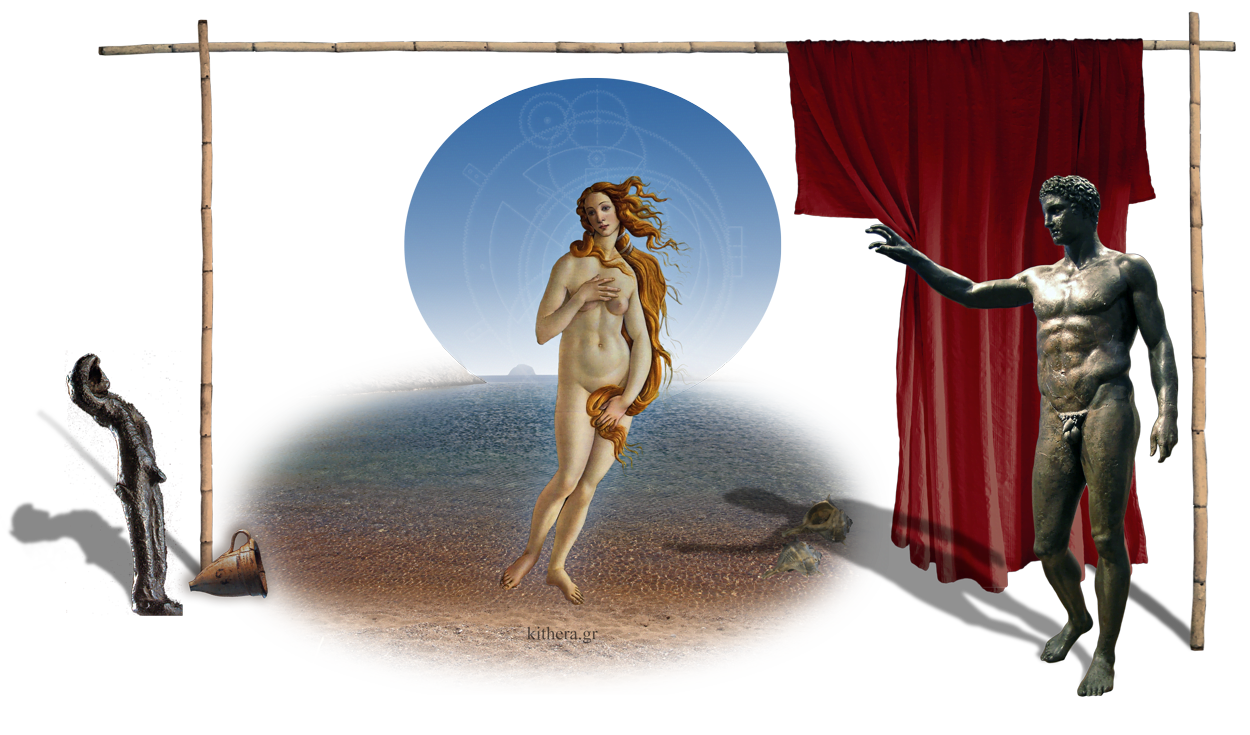
The old people of Kythira say it with pride: Aphrodite did not choose their island by chance. According to Hesiod, when Cronus mutilated Uranus, his genitals fell into the sea. From the white foam that was created, the goddess of Love was born.
If you go to the beach of Paleopolis, where kithera.gr guides you to find absolute peace, you feel this energy. The old people say that when there is a strong south wind and the waves are foaming wildly, if you close your eyes, you can still hear the song of the Nereids who welcomed the goddess before she departed for Cyprus.
The Beautiful Helen and the Lovers’ Refuge
Another story whispered in the courtyards of Kythera, there among the geraniums and Greek coffee, concerns the most famous couple of antiquity: Paris and the Beautiful Helen.
When they were stolen from Sparta, hunted and full of passion, they found refuge on Kythera. It is even said that they built a temple dedicated to Aphrodite to please her. The locals believe that their passage left the island with a permanent aura of romance. It is no coincidence that kithera.gr recommends Kythera as the ideal destination for those in love; the island has carried the blessing — or curse — of absolute love since ancient times.
Fairies and Elves in the Streams of Mylopotamos
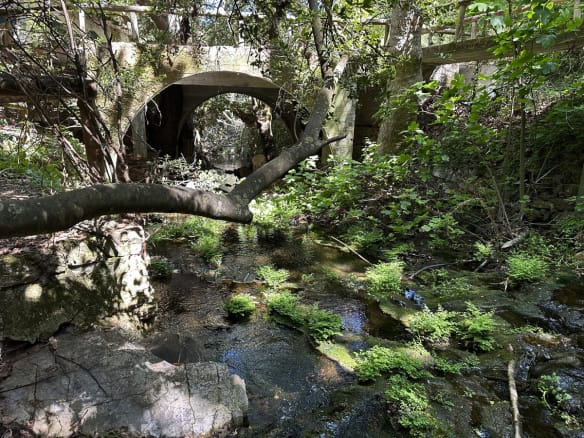
“Don’t cross the streams when the sun goes down,” a grandmother had told me in the cafe of Mylopotamos, even though the day seemed ideal for a walk. The elders on the island have a deeply rooted belief in fairies and elves, creatures that do not belong to the mortal world.
At the Fonissa waterfall, where the water rushes between the plane trees, locals swore that fairies gathered in the evenings to bathe their long, silky hair. They say that their laughter sounded like the gurgling of water and that any man who happened to see them was so enchanted that he was speechless or went mad with lust.
But also in the dark passages of the old watermills, legends speak of mischievous elves and goblins from the underworld who stole the millers’ flour and tangled the animals’ ropes. If you find the path to the ravine, walk it with respect; locals believe that the magic of these creatures remains alive in the shade of the trees.
The Secrets of the Caves
This otherworldly energy is also carried underground. The Cave of Agia Sophia in Mylopotamos hides its own metaphysical whispers. The ancients believed that the stalactites and stalagmites were not simple rocks, but mythical beings and elves who were marbled by the spells of the earth’s sorcerers to protect the secrets of the island from the evil spirits.
The ghosts of abandoned villages
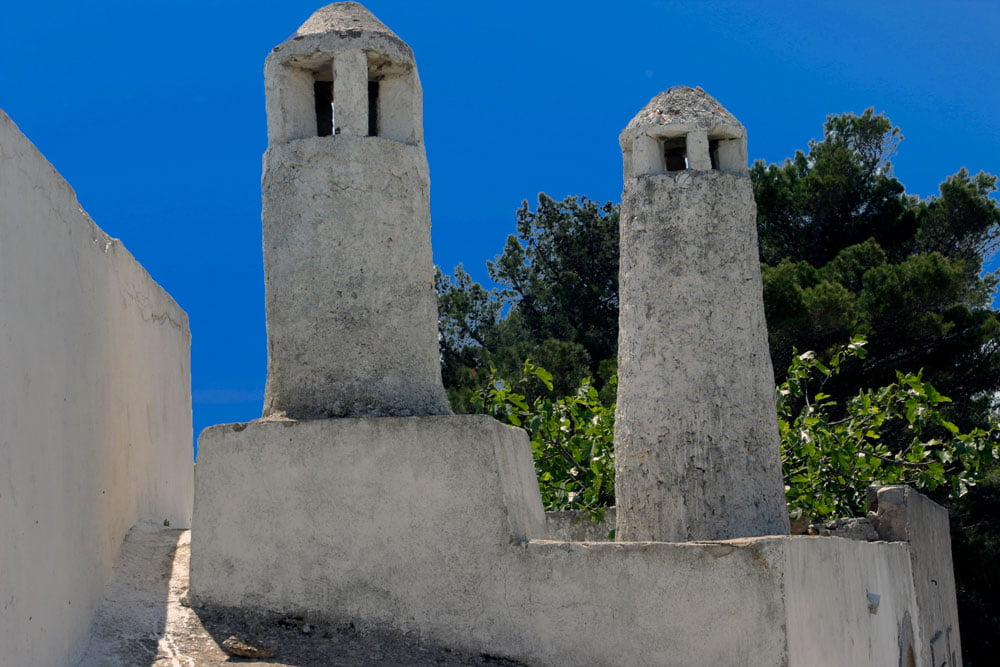
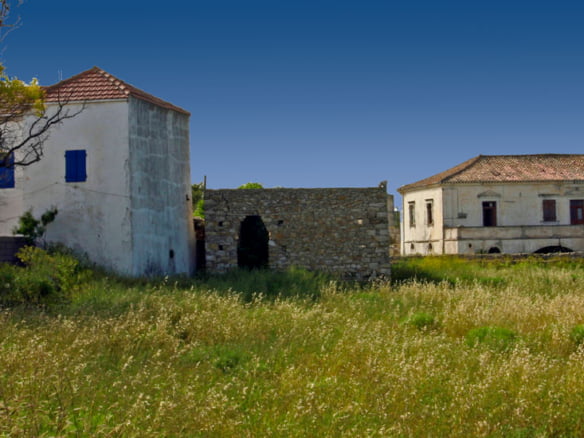
There are villages on Kythera that stand half-ruined, as if people abandoned them in a hurry, leaving behind something intangible. In one such place, someone whispered to me: “Not everyone left…” The stories speak of shadows that walk at night, of lights that turn on for no reason, of voices that sound like the wind — but they are not. They are not horror stories. They are stories of memory. The old people are not afraid of these “ghosts”. They respect them. Because they know that they are part of the place, just like themselves.
The treasure that was never found
In another story, I heard of a hidden treasure, buried somewhere between rocks and sea. Pirates, they say, left it there, intending to return. They never did. Many tried to find it. No one succeeded. “Why?” I asked. The answer was simple: “Because it’s not there to be found.” On Kythera, some myths don’t exist to be solved, but to keep you awake—to remind you that you can’t explain everything.
The island that remembers
If I learned anything from these narratives, it’s that Kythera is not just a destination. It is a living organism of memory. Myths do not belong to the past. They live in the people who tell them, in the way they look at the sea, in the way they fall silent when night falls. They have now become part of the history of Kythira.
And perhaps this is the most important thing: It doesn’t matter if the myths are true.
What matters is that people continue to believe them — or at least to believe them. they tell. Because as long as there are stories, Kythera will remain something more than an island. It will be a place between the real and the invisible. A place that, if you listen carefully, will speak to you too.
You don’t just see Kythera; you hear it, you feel it, and you dream about it. And as that fisherman in Avlemonas told me: “Whoever drinks water from Tsirigos never forgets the way back”.